
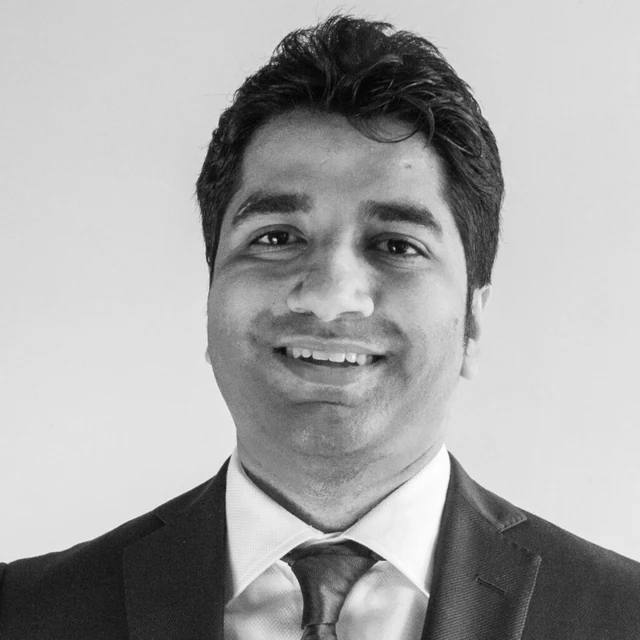
Sarvesh Gupta
Founder and Chief Investment Officer of Maximal Capital, a small Mumbai portfolio manager running two mandates — a concentrated fifteen-stock value book and an income strategy — both launched within a month of each other in mid-2022. He came to public markets the long way round, through five years in private equity at Gaja Capital and five as a registered investment adviser.
Is Sarvesh worth your time?
An IIT-IIM engineer who spent his first decade as a private-markets investor before setting up his own PMS. Gupta was a Principal at Gaja Capital from 2010 to 2015, then fund manager at Trivantage Capital's PMS in 2016-17, then a SEBI-registered investment adviser from 2017 advising high-net-worth, CXO, NRI and family-office portfolios, before founding Maximal Capital. APMI records him as the named fund manager of both of the firm's approaches: Maximal Pathfinder Value Fund, a concentrated equity book that started on 18 May 2022, and Maximal Income Fund, a debt-led approach that started on 8 June 2022 against a medium-to-long duration debt index. The philosophy is explicitly Buffett-inflected value investing. The live PMS record, however, is barely four years old.
Investors who want a genuinely concentrated, valuation-led equity book run by a single identifiable decision-maker, and who are comfortable that a fifteen-stock portfolio tilted to smaller companies will deviate hard from the index in both directions. It suits a three-to-five year horizon at minimum and someone willing to underwrite the person rather than the institution, because the institution here is four people. If you want a long, regulated, independently verifiable track record attached to this manager, the PMS record only starts in 2022 — the longer numbers on the firm's own website are a different thing, and the firm says so itself.
- The equity book is deliberately concentrated at roughly fifteen names, with the top ten over sixty per cent.
- Both strategies launched within a month of each other in 2022, so the live record is short and untested.
- A four-person firm with one named fund manager on both mandates concentrates key-person risk.
- The homepage's decade-long '30%+ yearly returns' headline is largely a pre-PMS record the firm itself labels unaudited.
About Sarvesh Gupta
Sarvesh Gupta is the founder and Chief Investment Officer of Maximal Capital Private Limited, a SEBI-registered portfolio manager in Mumbai holding registration INP000007313. APMI records him as the named fund manager of both of the firm's investment approaches as of July 2026.
He holds an MBA from IIM Ahmedabad and a B.Tech from IIT Kharagpur, and the firm describes him as a professional investor across listed and unlisted markets for almost fifteen years. He was a Principal at Gaja Capital, a private equity firm, from 2010 to 2015, then fund manager at Trivantage Capital's PMS in 2016-17, where the firm says he built the fund from a standing start. From 2017 to 2022 he worked as a SEBI-registered investment adviser to high-net-worth individuals, senior executives, non-resident Indians and family offices before launching the PMS.
Career
- Present
Founder & Chief Investment Officer, Maximal Capital Private Limited
Named fund manager on APMI of both Maximal Pathfinder Value Fund and Maximal Income Fund as of July 2026, supported by an investment analyst, a head of operations and compliance, and a client relations lead.
- 2017 – 2022
SEBI-registered investment adviser
Advised the portfolios of high-net-worth individuals, senior executives, non-resident Indians and family offices before launching the portfolio management business. A PMS data platform gives this period as 2017-21 rather than 2017-22.
- 2016 – 2017
Fund Manager, Trivantage Capital (PMS)
The firm states he grew the fund from a standing start and delivered high double-digit alpha. The returns from this period are presented on Maximal's own site as unaudited historical returns of the fund manager.
- 2010 – 2015
Principal, Gaja Capital
Private equity, investing across financial services, consumer and education businesses. Five years of underwriting private companies before he moved to public markets.
- before 2010
B.Tech, IIT Kharagpur; MBA, IIM Ahmedabad
The engineering and management grounding that precedes the investing career.
Six principles
Value, in the classical sense
The firm names Berkshire Hathaway's ethos as its model and looks for securities at a substantial discount to general market valuations, without giving up business quality or growth.
Concentration on purpose
Roughly fifteen holdings, with the top ten stated at over sixty per cent of allocations. The book is built to express conviction, not to diversify it away.
Where the mispricing lives
Multi-cap by permission but tilted towards small and mid-sized companies, on the view that under-researched businesses are where discounts persist.
Independent primary research
The firm says its research is conducted first-hand rather than inherited from a private-equity style diligence process, and that it balances exposure between higher- and lower-beta sectors.
A second mandate for income, not growth
Maximal Income Fund is filed as a debt strategy against a medium-to-long duration index, seeking consistent income from dividends and interest with capital appreciation as an upside.
Long holding periods, stated plainly
Three to five years for the equity book; the income approach's APMI objective says outright it is meant for investors staying put not less than four to five years.
The call that shows the method working
Two mandates on the register — and a headline that needs unpicking
The Association of Portfolio Managers in India, the SEBI-recognised body for the PMS industry, records Sarvesh Gupta as the named fund manager of both Maximal Capital approaches as of July 2026. Maximal Pathfinder Value Fund is filed as an equity strategy benchmarked to the BSE 500 TRI with an inception date of 18 May 2022; Maximal Income Fund is filed as a debt strategy benchmarked to the Nifty Medium to Long Duration Debt Index with an inception date of 8 June 2022. Both carry a ₹50 lakh minimum. The firm's SEBI portfolio-manager registration, INP000007313, is published on its own website.
Those two dates are the ones to hold on to. The firm's homepage headlines a decade-strong record of 30%-plus yearly returns, and its own track-record page shows why that needs unpicking: the PMS series runs from 2022, and the longer history sits in a separate section labelled the fund manager's previous role, footnoted as unaudited. The firm adds that performance information on the page is not verified by SEBI or any other regulated body. That is a candid disclosure, and it should be read before the headline is.
- 2010 – 2015Principal at Gaja Capital — five years underwriting private companies
- 2016 – 2017Fund manager at Trivantage Capital PMS; returns from this period are labelled unaudited by Maximal
- 2017 – 2022SEBI-registered investment adviser to HNI, CXO, NRI and family-office clients
- 2021Maximal Capital Private Limited incorporated, per its own CIN
- 18 May 2022Maximal Pathfinder Value Fund inception, per APMI
- 8 Jun 2022Maximal Income Fund inception, per APMI — three weeks after the equity book
- 31 Jul 2026APMI records him as named fund manager on both approaches
How the strategies have performed
Trailing returns, net of fees, annualised beyond one year. Shown only when sourced and dated; missing figures are unavailable, never zero.
| Strategy | 1Y | 3Y | Since inception |
|---|---|---|---|
| Maximal Income Fund | +18.61% | +21.23% | +19.84% |
| Maximal Pathfinder Value Fund | +9.76% | +17.79% | +25.4% |
Your return will not be the headline number. This is the spread of Sarvesh's 2 tracked strategies' 3-year CAGR. Which strategy you hold, and when you invested, both move your outcome. Strategy-level dispersion, not a record of individual client accounts.
Figures are historical, unaudited and third-party reported, as of 2026-06-30. Past performance is not indicative of future returns.
What to press Sarvesh on
Bring these to the call.
Which numbers are regulated?
Ask for the PMS performance series from May and June 2022 separately from anything earlier. The pre-PMS figures are the manager's own, unaudited by the firm's own footnote, and should never be blended into the mandate's record.
How large can one position get?
With roughly fifteen names and the top ten over sixty per cent, single-stock outcomes drive the book. Ask for the maximum single-stock weight, the current market-cap split and the sector limits.
Can a small-cap-tilted book be exited?
Ask how many trading days it would take to liquidate the top five positions at normal volumes, and what the policy is if redemptions arrive during a drawdown.
Who decides if he is unavailable?
He is the named fund manager on both approaches at a four-person firm. Ask for the deputy, the trade sign-off process and the documented succession arrangement.
What exactly is the income fund?
It is filed as a debt strategy but its permitted products include equity and mutual funds, and the firm describes dividend-paying securities alongside AAA-rated paper. Ask for the current asset mix and the credit-quality distribution.
Get the fee schedule in writing
APMI's fee fields are blank for both approaches. Ask for the fixed fee if any, the variable fee, the hurdle and its basis, high-water-mark treatment, exit load and brokerage arrangements.
Ask them to reconcile the headline
A decade-strong 30%-plus claim on the homepage of a firm incorporated in 2021 deserves a direct question. Ask which portfolios produced it, over which dates, and whether any part of it has been independently verified.
How they compare
Comparable managers on the platform, by asset class and category · live fund figures.
| Manager | 1Y | 3Y | AUM | Nyra |
|---|---|---|---|---|
| Rajeev Bajaj Systamatix - Dynamic Investment · PMS | +18.2% | +23.6% | ₹158.52 Cr | 8.4 |
| Madanagopal Ramu Sundaram Alternate - VOYAGER · PMS | +28% | +23.1% | ₹0 Cr | 8.3 |
| PAWAN KUMAR Shade - Value Fund · PMS | +14.9% | +23.7% | ₹0 Cr | 8.2 |
| Sameer Shah ValueQuest - Growth · PMS | +18.7% | +19.4% | ₹2,019.95 Cr | 8.2 |
Sarvesh Gupta · FAQ
What does Sarvesh Gupta manage?
How concentrated is the equity portfolio?
What is the '30%+ yearly returns' claim on the website?
How long has the live record been running?
How big is the firm?
What is the minimum investment, and what are the fees?
Considering Sarvesh's strategy?
We'll pull the current Disclosure Document, the actual fee schedule, and a portfolio-overlap check against what you already own.
PMS Sahi Hai is a distributor (APMI Reg. APRN08358), not a SEBI-registered Investment Adviser. APMI registration does not constitute an endorsement. We are paid by the product manufacturer; this does not change the price you pay. PMS & AIF investments are subject to market risks; past performance is not indicative of future returns. This is not investment advice. PMS Sahi Hai is an independent marketplace and is not affiliated with Sarvesh Gupta.